Keeping pool water balanced is one of the most important parts of owning a pool in Bartow. Clear water may look healthy, but appearance alone does not tell the full story. Pool water can look clean and still have pH, chlorine, alkalinity, calcium, or stabilizer levels that are outside the ideal range.
Balanced water protects swimmers, pool surfaces, equipment, tile, coping, and plumbing. It also helps prevent algae, cloudy water, scaling, staining, corrosion, and unnecessary Pool Repairs.
For homeowners in Bartow, Winter Haven, Auburndale, Eagle Lake, Lake Alfred, Polk City, and surrounding Central Florida communities, year-round Pool Maintenance matters because Florida pools face heat, humidity, rain, storms, debris, and frequent use. The better you understand water balance, the easier it becomes to keep your pool safe, clean, and enjoyable in every season.
Extreme Pools Inc provides professional Pool Maintenance, Pool Repairs, Pool Renovation, Pool Design, and Pool Construction services for homeowners who want dependable long-term pool care.
Why Pool Water Balance Matters
Balanced pool water is about more than comfort. It affects almost every part of your pool system.
When water chemistry is correct, sanitizer works properly, surfaces last longer, equipment operates more efficiently, and swimmers are more comfortable. When water is out of balance, problems can develop quickly.
Poorly balanced pool water can cause:
- Cloudy water
- Algae growth
- Eye and skin irritation
- Chlorine inefficiency
- Scale buildup
- Staining
- Corrosion
- Rough pool surfaces
- Filter problems
- Equipment damage
- Tile and coping issues
- Increased Pool Repairs
In Bartow’s warm climate, water chemistry can shift quickly. A few days of heavy rain, high heat, or heavy pool use can change the balance enough to create problems.
Understand the Main Parts of Pool Water Balance
To keep your pool balanced throughout the year, homeowners should understand the main water chemistry levels that need attention.
Chlorine
Chlorine helps sanitize the pool and control bacteria, algae, and organic contaminants. If chlorine is too low, algae and cloudy water can develop. If it is too high, swimmers may experience discomfort and water may become harsh.
Chlorine levels can drop quickly in Bartow’s heat, especially after storms or heavy swimming.
pH
pH measures how acidic or basic the water is. This is one of the most important levels to monitor because it affects swimmer comfort and chlorine performance.
High pH can reduce chlorine effectiveness and contribute to cloudy water or scaling. Low pH can cause corrosion, surface etching, and irritation.
Total Alkalinity
Alkalinity helps stabilize pH. If alkalinity is too low, pH can swing quickly. If alkalinity is too high, pH may become difficult to adjust.
Keeping alkalinity stable makes the rest of your Pool Maintenance easier.
Calcium Hardness
Calcium hardness measures the amount of dissolved calcium in the water. If calcium is too low, water may become aggressive and damage pool surfaces. If calcium is too high, scaling and cloudy water may develop.
Florida water conditions can vary, so calcium should be monitored as part of routine care.
Cyanuric Acid
Cyanuric acid, often called stabilizer, helps protect chlorine from being broken down too quickly by sunlight. Too little stabilizer can cause chlorine to disappear fast. Too much stabilizer can reduce chlorine effectiveness.
This balance is especially important in sunny Central Florida.
Salt Level
If your pool uses a salt chlorine generator, salt level should be checked regularly. A salt system still requires testing, balancing, and maintenance. It is not a maintenance-free system.
Test Pool Water Consistently
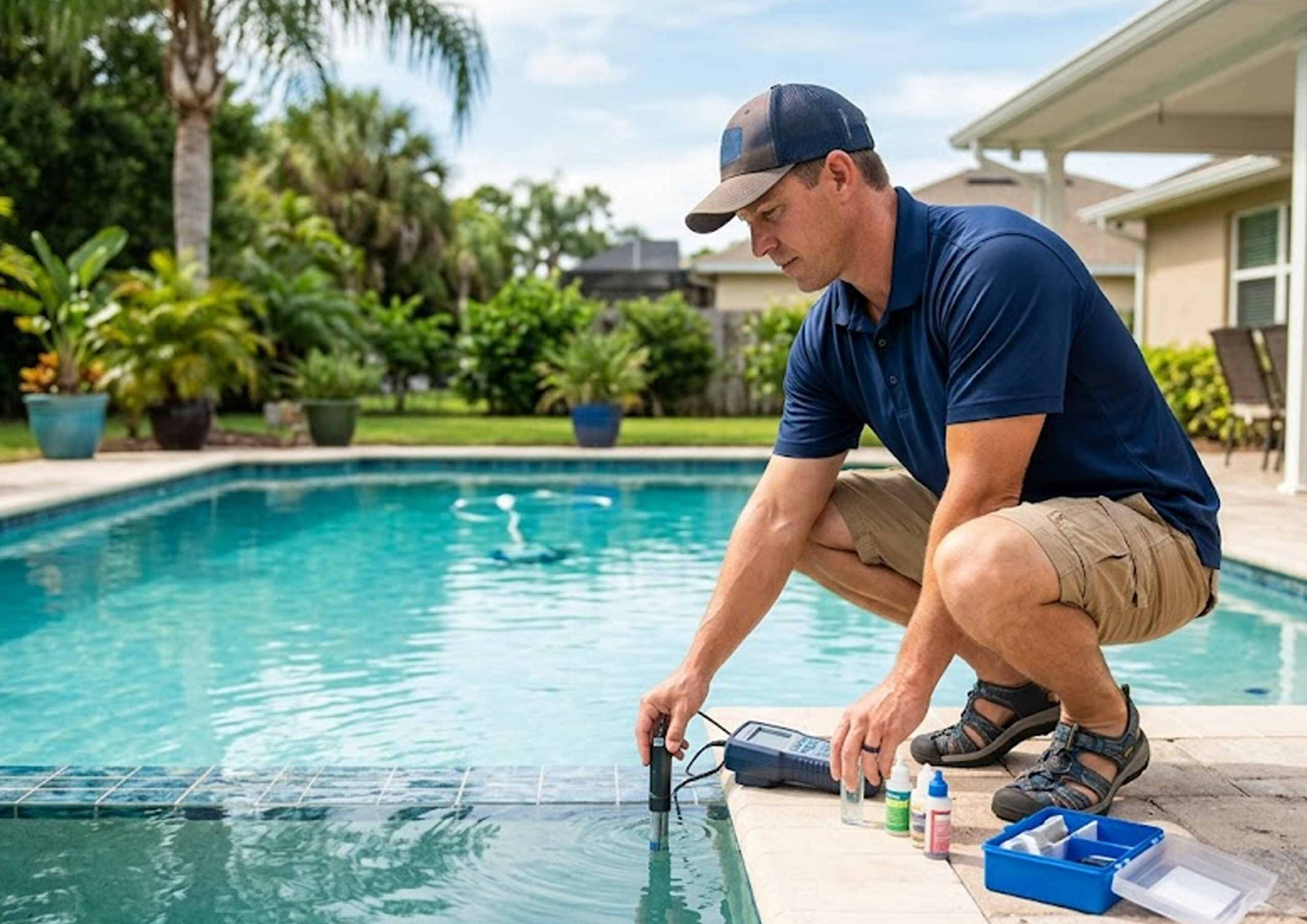
Regular testing is the foundation of balanced pool water. Without testing, homeowners are only guessing.
Water should be tested often enough to catch changes before they become visible problems. During hot weather, rainy periods, or heavy pool use, testing may need to happen more frequently.
When Bartow Homeowners Should Test More Often
Test your pool water more often:
- During hot summer months
- After heavy rain
- After pool parties
- After several days of heavy use
- When water looks cloudy
- When algae appears
- After adding chemicals
- When equipment has been repaired
- When opening or restarting a pool after downtime
- When water feels uncomfortable
A consistent testing method helps homeowners make better decisions instead of reacting only after water problems appear.
Balance Chlorine Throughout the Year
Chlorine demand changes with weather, use, sunlight, and debris. In Bartow, chlorine often works hardest during hot and rainy months.
Why Chlorine Drops
Chlorine levels may drop because of:
- Strong sunlight
- Heavy swimming
- Rain dilution
- Organic debris
- Algae growth
- Low stabilizer
- Poor circulation
- Dirty filters
- High contaminant load
Signs Chlorine May Be Too Low
Watch for:
- Cloudy water
- Green or yellow algae
- Slippery pool surfaces
- Dull water appearance
- Unpleasant odor
- Water that does not feel clean
How to Keep Chlorine Stable
To help maintain chlorine:
- Test regularly
- Keep stabilizer in the proper range
- Remove debris quickly
- Brush surfaces
- Run the pump long enough
- Clean filters and baskets
- Shock when needed
- Schedule professional Pool Maintenance
If chlorine disappears quickly even after adjustments, the pool may have algae, filtration issues, or circulation problems that require professional attention.
Keep pH in the Right Range
pH balance affects comfort, sanitation, and pool protection. Even if chlorine is present, it may not work well if pH is too high.
Signs pH May Be Too High
High pH can cause:
- Cloudy water
- Scaling
- Reduced chlorine performance
- Rough surfaces
- Staining
- Filter issues
Signs pH May Be Too Low
Low pH can cause:
- Eye irritation
- Skin discomfort
- Corrosion
- Etching
- Metal damage
- Equipment wear
Why pH Changes in Bartow Pools
pH can shift due to:
- Rain
- Chemical additions
- Heavy use
- Aeration from water features
- Fill water
- Alkalinity changes
- Debris
- Improper chemical dosing
Because pH affects so many other parts of water balance, it should be checked regularly.
Manage Total Alkalinity
Alkalinity helps prevent sudden pH swings. If your pH is constantly rising or falling, alkalinity may be part of the problem.
Low Alkalinity Problems
Low alkalinity may cause:
- Rapid pH changes
- Corrosive water
- Surface damage
- Irritation
- Equipment wear
High Alkalinity Problems
High alkalinity may cause:
- Cloudy water
- Scaling
- pH that is difficult to lower
- Reduced water clarity
- Calcium buildup
Keeping alkalinity steady makes the pool easier to balance throughout the year.
Monitor Calcium Hardness
Calcium hardness is often overlooked, but it plays an important role in protecting your pool surface and equipment.
Low Calcium Hardness
If calcium is too low, water may pull minerals from pool surfaces and materials. This can contribute to etching, roughness, and surface deterioration.
High Calcium Hardness
If calcium is too high, you may see:
- Scale buildup
- Cloudy water
- Rough deposits
- Filter issues
- Staining
- Waterline marks
Calcium levels should be checked as part of routine Pool Maintenance, especially if you add water frequently or have ongoing scaling issues.
Keep Stabilizer from Getting Too High or Too Low
Stabilizer helps protect chlorine from sunlight, but too much can create problems.
Low Stabilizer
Low stabilizer can cause chlorine to burn off quickly in the sun. This can make the pool harder to sanitize, especially during hot Bartow summers.
High Stabilizer
High stabilizer can reduce chlorine effectiveness. The water may test as having chlorine, but it may not sanitize as effectively as expected.
Why Stabilizer Matters in Florida
Because Bartow pools are exposed to strong sunlight, stabilizer is important. However, balance is key. Too little or too much can make water care more difficult.
Adjust for Hot Summer Weather
Summer is the most demanding season for pool water balance in Bartow. Heat, sun, storms, and frequent swimming can quickly affect chemistry.
Summer Pool Challenges
During summer, pools often experience:
- Faster chlorine loss
- Higher algae risk
- More swimmer contaminants
- More rain dilution
- Higher evaporation
- More debris from storms
- Greater filter demand
- Increased equipment run time
Summer Maintenance Tips
During hot months:
- Test water more often
- Keep chlorine consistent
- Watch pH and alkalinity
- Run the pump long enough
- Brush steps and corners
- Clean baskets frequently
- Check filter pressure
- Remove storm debris quickly
- Schedule regular Pool Maintenance
Hot weather leaves less room for skipped care. A pool can turn cloudy or green quickly if sanitizer drops or circulation weakens.
Adjust for Rainy Season
Rainy season can make pool water harder to manage. Heavy rain may dilute chemicals, raise water levels, wash debris into the pool, and affect pH or alkalinity.
After Heavy Rain, Check:
- Chlorine level
- pH
- Alkalinity
- Water level
- Skimmer baskets
- Pump basket
- Filter pressure
- Debris on the pool floor
- Algae-prone areas
- Equipment pad condition
Why Rainy Season Requires Quick Action
If debris sits in the pool, it can stain surfaces and increase chlorine demand. If water level gets too high, the skimmer may not work properly. If chemicals are diluted, algae can start growing faster.
After storms, quick cleanup and testing are essential.
Adjust for Cooler Months
Even though Bartow winters are milder than many parts of the country, pools still need care during cooler months. Lower usage does not mean no maintenance.
Cooler Weather Pool Care
During cooler periods:
- Continue testing water
- Keep sanitizer at proper levels
- Maintain pH and alkalinity
- Remove leaves and debris
- Run equipment as needed
- Watch water level
- Keep filters clean
- Inspect equipment regularly
Some homeowners reduce pool use in cooler months and accidentally reduce care too much. This can lead to algae, staining, and equipment problems.
Run the Pump Long Enough
Water balance is not just about chemicals. Circulation is essential. Your pump helps distribute chemicals, move water through the filter, and prevent stagnant areas where algae can grow.
Signs of Poor Circulation
Watch for:
- Weak return jets
- Debris collecting in corners
- Cloudy water
- Algae on steps or ledges
- Air bubbles in return lines
- Skimmer not pulling debris
- Pump losing prime
- Filter pressure problems
Why Circulation Affects Balance
Even if chemicals are added correctly, they will not work well if water is not moving. Poor circulation can create dead spots, uneven sanitizer levels, and recurring algae.
If circulation remains weak after baskets and filters are cleaned, Pool Repairs may be needed.
Keep Filters Clean
Filters remove small particles from the water and support clear, balanced conditions. A dirty or failing filter can make chemistry harder to manage.
Signs Your Filter Needs Attention
You may notice:
- Cloudy water
- High filter pressure
- Low filter pressure
- Weak water flow
- Debris returning to the pool
- Algae returning quickly
- Filter leaks
- Frequent need for cleaning
Why Filter Care Matters
A pool with poor filtration often needs more chemicals and more cleaning. Keeping filters clean helps water balance stay more stable.
If filter problems continue after cleaning, schedule professional Pool Repairs or equipment inspection.
Brush and Skim Regularly
Brushing and skimming are simple, but they are essential for water balance. Debris and algae can affect chemistry quickly, especially in warm weather.
Areas That Need Regular Brushing
Brush:
- Steps
- Corners
- Benches
- Tanning ledges
- Tile line
- Around ladders
- Shaded areas
- Low-circulation zones
Why Brushing Helps Balance
Brushing breaks up early algae growth and helps sanitizer work more effectively. Skimming removes organic debris before it breaks down and consumes chlorine.
These habits reduce chemical demand and help prevent cloudy water.
Watch Water Level
Water level affects skimming, circulation, and equipment protection. Too little water can cause the pump to pull air. Too much water can reduce skimmer performance.
Low Water Problems
Low water can cause:
- Pump losing prime
- Air in the system
- Poor circulation
- Equipment damage
- Reduced filtration
High Water Problems
High water can cause:
- Poor skimmer action
- Debris staying on the surface
- Chemical dilution
- Overflow issues
- Drainage concerns
If water level drops quickly without an obvious reason, a leak may be present and Pool Repairs should be scheduled.
Avoid Adding Chemicals Without Testing
Guessing is one of the most common pool care mistakes. Adding chemicals without testing can make water balance worse.
Why Guessing Causes Problems
Guessing may lead to:
- Overchlorination
- High pH
- Low pH
- High alkalinity
- Scaling
- Corrosion
- Cloudy water
- Surface damage
- Wasted chemicals
Testing first helps you add only what the pool actually needs.
Know When Cloudy Water Means More Than Chemistry
Cloudy water is often blamed on chemicals, but the real cause may be circulation, filtration, equipment, or early algae growth.
Cloudy Water May Be Caused By:
- Low chlorine
- High pH
- Dirty filter
- Poor circulation
- Heavy rain
- Heavy swimmer use
- Algae beginning to grow
- Equipment problems
- High calcium
- High alkalinity
If water stays cloudy after proper balancing, a professional inspection may be needed. The issue may require Pool Repairs rather than more chemicals.
Prevent Algae Year-Round
Algae is one of the most common pool problems in Central Florida. It can grow quickly when chlorine drops, circulation is poor, or debris remains in the pool.
Early Signs of Algae
Watch for:
- Green spots
- Yellow patches
- Slippery walls
- Cloudy water
- Algae on steps
- Algae near ladders
- Algae in shaded areas
- Recurring discoloration
How to Reduce Algae Risk
To prevent algae:
- Maintain sanitizer
- Keep pH balanced
- Brush regularly
- Clean filters
- Run the pump long enough
- Remove debris quickly
- Test after storms
- Address circulation problems
- Schedule professional Pool Maintenance
Recurring algae often means something deeper is wrong, such as weak circulation, dirty filters, old equipment, or worn surfaces.
Understand How Pool Repairs Affect Water Balance
Pool equipment problems can make water balance harder. If pumps, filters, valves, or plumbing are not working correctly, chemicals may not distribute or filter properly.
Repairs That Can Affect Water Balance
Pool Repairs may be needed for:
- Pump issues
- Filter problems
- Plumbing leaks
- Valve leaks
- Air leaks
- Salt system problems
- Heater issues
- Automation failures
- Poor circulation
- Equipment leaks
- Broken return fittings
A pool with unresolved repair needs may require more chemicals and still fail to stay clear.
Consider Pool Renovation if Water Balance Is Always Difficult
Sometimes water balance problems are caused by aging surfaces, outdated equipment, poor circulation, or old Pool Design.
If your pool is constantly cloudy, algae-prone, stained, rough, or difficult to maintain, Pool Renovation may be worth considering.
Renovation Upgrades That Help Water Balance
Pool Renovation may include:
- New interior finish
- Better filtration
- Variable-speed pump
- Updated plumbing
- Improved circulation
- Salt system
- Automation
- LED lighting
- New tile and coping
- Equipment pad upgrades
Renovation and upgrade demand is strong across Central Florida residential communities because many homeowners want pools that are easier to maintain and more reliable year-round.
Design Future Pools with Water Balance in Mind
If you are planning new Pool Construction, water balance should be considered during Pool Design. A beautiful pool should also be easy to circulate, filter, clean, and maintain.
Design Choices That Support Balanced Water
Good Pool Design should include:
- Proper return placement
- Correct skimmer placement
- Efficient pump and filter sizing
- Manageable pool size
- Easy-to-clean shapes
- Good drainage
- Durable finishes
- Practical equipment access
- Smart automation options
- Debris-conscious landscaping
New Pool Construction in Bartow and Polk City continues to grow as homeowners invest in outdoor living. Designing for long-term maintenance from the start helps protect that investment.
Use Professional Pool Maintenance for Consistency
Many homeowners can handle basic pool care, but professional Pool Maintenance provides consistency. This is especially valuable in Bartow, where weather and pool use can change quickly.
Professional Pool Maintenance May Include:
- Water testing
- Chemical balancing
- Skimming
- Brushing
- Vacuuming
- Basket cleaning
- Filter checks
- Equipment inspection
- Water level monitoring
- Algae prevention
- Early repair detection
Professional service helps catch small problems before they turn into expensive Pool Repairs.
Common Water Balance Mistakes to Avoid
Many pool problems come from small mistakes repeated over time.
Mistake 1: Only Testing When Water Looks Bad
By the time water looks cloudy or green, the problem has already started. Test regularly.
Mistake 2: Ignoring pH
Chlorine may not work properly if pH is too high or too low.
Mistake 3: Forgetting About Alkalinity
Unstable alkalinity makes pH harder to control.
Mistake 4: Letting Debris Sit
Leaves and organic material consume chlorine and can stain surfaces.
Mistake 5: Running the Pump Too Little
Poor circulation leads to algae, cloudy water, and uneven chemical distribution.
Mistake 6: Ignoring Equipment Problems
A weak pump or dirty filter can make water balance nearly impossible.
Why Choose Extreme Pools Inc for Pool Maintenance in Bartow?
Extreme Pools Inc helps Bartow homeowners keep their pool water balanced, clear, and ready to enjoy throughout the year. Our team understands Central Florida pool conditions, including summer heat, rainy-season storms, humidity, debris, and frequent pool use.
Our Services Include
- Pool Maintenance
- Pool Design
- Pool Construction
- Pool Renovation
- Pool Repairs
We proudly serve homeowners in Bartow, Winter Haven, Auburndale, Eagle Lake, Lake Alfred, Polk City, and nearby Central Florida communities.
Whether your pool needs weekly maintenance, equipment repairs, renovation guidance, or help planning a new pool, Extreme Pools Inc provides practical service focused on long-term pool care.
Final Thoughts: Balanced Water Takes Consistent Care
Keeping pool water balanced in Bartow throughout the year requires regular testing, proper chemical adjustments, strong circulation, clean filtration, debris removal, and quick response to repair issues.
The most important habits are simple:
- Test water consistently
- Maintain chlorine
- Control pH and alkalinity
- Watch calcium and stabilizer
- Clean filters and baskets
- Brush and skim regularly
- Keep water level correct
- Run the pump long enough
- Address Pool Repairs early
- Schedule professional Pool Maintenance
With the right care, your pool can stay cleaner, safer, and more enjoyable in every season.
Schedule Pool Maintenance in Bartow
Need help keeping your pool water balanced year-round?
Contact Extreme Pools Inc today to schedule a consultation, request a pool inspection, or discuss your backyard goals.