
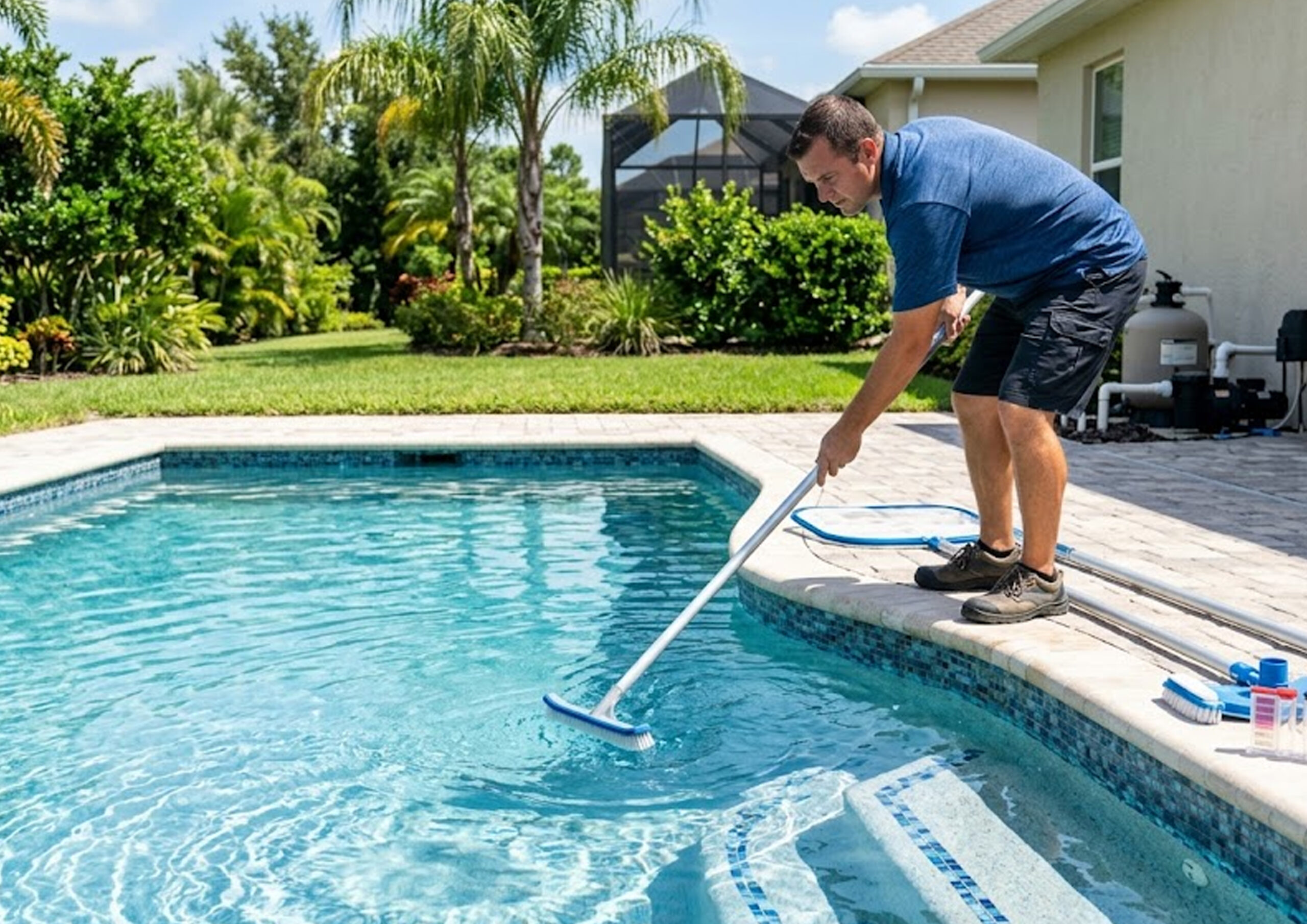
Algae is one of the most common pool problems homeowners face in Winter Haven. One week your pool may look clear and inviting, and after a few hot days, heavy rain, or missed maintenance steps, green spots can begin appearing on walls, steps, corners, or ledges.
The good news is that algae is usually preventable with consistent Pool Maintenance. The key is keeping water balanced, maintaining proper sanitizer levels, running equipment correctly, brushing problem areas, cleaning filters, and addressing Pool Repairs before circulation or filtration issues get worse.
For homeowners in Winter Haven, Auburndale, Eagle Lake, Bartow, Lake Alfred, Polk City, and surrounding Central Florida communities, algae prevention is especially important because pools are exposed to heat, humidity, rain, debris, and frequent use throughout much of the year.
Extreme Pools Inc helps homeowners keep pools clean, balanced, safe, and algae-free through professional Pool Maintenance, Pool Repairs, Pool Renovation, Pool Design, and Pool Construction services.
Why Algae Grows So Easily in Winter Haven Pools
Winter Haven’s warm Central Florida climate is ideal for swimming, but it can also create ideal conditions for algae. Warm water, sunlight, humidity, rain, and organic debris can all contribute to algae growth when pool maintenance is inconsistent.
Algae can develop when:
- Chlorine drops too low
- pH is out of balance
- Water circulation is weak
- Filters are dirty
- Debris sits in the pool
- Brushing is skipped
- Rain dilutes chemicals
- Pool equipment is not working properly
- Water is not tested often enough
- The pool surface is rough or aging
Once algae starts growing, it can spread quickly. That is why prevention is much easier than treatment.
Understand the Different Types of Pool Algae
Not all algae looks the same. Knowing what type of algae you are dealing with can help you understand how serious the issue may be.
Green Algae
Green algae is the most common type. It can make the water look cloudy, dull, green, or swampy. It may also appear as green spots on pool walls, steps, benches, or corners.
Green algae often develops when chlorine is low or circulation is poor.
Yellow or Mustard Algae
Yellow algae usually appears as dusty yellow or brownish patches, often in shaded areas. It can be more stubborn than green algae and may return if not treated thoroughly.
It often appears near pool walls, steps, ladders, and areas with limited circulation.
Black Algae
Black algae can appear as dark spots on pool surfaces and may be more difficult to remove because it can root into porous surfaces. It is especially important to address black algae quickly and professionally.
If algae keeps returning after treatment, there may be a deeper Pool Maintenance or Pool Repairs issue that needs attention.
Start with Consistent Water Testing
Water testing is the foundation of algae prevention. Pool water can look clear while still being out of balance. If chlorine, pH, or alkalinity are off, algae can begin forming before homeowners notice visible signs.
What to Test Regularly
Winter Haven homeowners should monitor:
- Chlorine
- pH
- Total alkalinity
- Calcium hardness
- Stabilizer
- Salt level if using a salt system
- Phosphates if algae keeps returning
Testing helps you correct small water balance problems before algae begins spreading.
When to Test More Often
Test more frequently:
- During hot weather
- After heavy rain
- After pool parties
- After several days of heavy use
- When water looks cloudy
- When algae spots appear
- After adding chemicals
- When equipment is repaired
- When chlorine seems to disappear quickly
A steady testing practice helps prevent algae before it becomes visible.
Keep Chlorine Levels Consistent
Chlorine is one of the most important tools for preventing algae. When chlorine drops too low, algae can grow quickly, especially in warm Florida water.
Why Chlorine Drops in Winter Haven Pools
Chlorine may drop because of:
- Strong sunlight
- Heavy swimming
- Rain dilution
- Leaves and debris
- High organic load
- Low stabilizer
- Poor circulation
- Dirty filters
- Existing algae growth
Signs Chlorine May Be Too Low
Watch for:
- Cloudy water
- Dull water appearance
- Slippery walls
- Green spots
- Yellow patches
- Strong unpleasant odor
- Water that does not feel clean
How to Keep Chlorine Stable
To keep sanitizer levels consistent:
- Test water regularly
- Maintain proper stabilizer levels
- Remove debris quickly
- Clean filters and baskets
- Brush walls and steps
- Run the pump long enough
- Shock when needed
- Schedule professional Pool Maintenance
If chlorine drops quickly even after treatment, the pool may have algae already developing or a circulation problem that requires professional service.
Balance pH and Alkalinity
Chlorine works best when pH is properly balanced. If pH is too high, chlorine becomes less effective. If pH is too low, the water may become corrosive and uncomfortable.
Problems Caused by High pH
High pH can contribute to:
- Reduced chlorine effectiveness
- Cloudy water
- Scaling
- Staining
- Rough surfaces
- Filter problems
- Higher algae risk
Problems Caused by Low pH
Low pH can cause:
- Eye irritation
- Corrosion
- Surface etching
- Equipment wear
- Metal damage
Why Alkalinity Matters
Alkalinity helps stabilize pH. If alkalinity is too low, pH can swing quickly. If alkalinity is too high, pH can become difficult to adjust.
Balanced pH and alkalinity make algae prevention easier and help protect the pool surface and equipment.
Run Your Pool Pump Long Enough
Good circulation is essential for algae prevention. Your pump moves water through the filter and helps distribute chemicals evenly throughout the pool.
When circulation is weak or pump run time is too short, algae can start growing in low-flow areas.
Signs of Poor Circulation
Watch for:
- Weak return jets
- Debris collecting in corners
- Cloudy water
- Algae on steps or ledges
- Air bubbles in return lines
- Poor skimmer action
- Pump losing prime
- Filter pressure changes
Why Circulation Prevents Algae
Strong circulation helps:
- Move water through the filter
- Distribute chlorine evenly
- Prevent stagnant areas
- Reduce debris buildup
- Improve water clarity
- Support salt systems
- Reduce algae-prone dead spots
If your pool has weak flow even after baskets and filters are cleaned, you may need Pool Repairs.
Clean Filters and Baskets Regularly
Dirty filters and clogged baskets reduce water flow. When water cannot move properly through the system, algae is more likely to grow.
What to Clean
Regularly check:
- Skimmer baskets
- Pump basket
- Cartridge filter
- Sand filter pressure
- DE filter pressure
- Pool cleaner bag or canister
- Return flow
- Filter gauge readings
Signs Your Filter Needs Attention
Your filter may need service if:
- Water stays cloudy
- Filter pressure is too high
- Filter pressure is too low
- Flow is weak
- Algae returns quickly
- Debris returns to the pool
- Filter leaks
- Pressure rises quickly after cleaning
A clean filter supports clear water and reduces algae risk. If filter problems continue, professional Pool Repairs may be needed.
Brush Algae-Prone Areas Often
Brushing is one of the most important algae prevention steps. Even when water looks clear, algae can begin forming on surfaces, especially where circulation is weaker.
Areas That Need Extra Brushing
Focus on:
- Steps
- Corners
- Benches
- Tanning ledges
- Tile line
- Around ladders
- Shaded areas
- Behind water features
- Low-circulation spots
Brushing breaks up early algae growth and helps chlorine work more effectively. Skipping brushing allows algae to attach and spread.
Remove Debris Quickly
Leaves, pollen, grass, insects, and storm debris can feed algae and increase chlorine demand. The longer debris sits in the pool, the more it affects water balance.
After Wind or Rain, Check:
- Pool surface
- Pool floor
- Steps and benches
- Skimmer baskets
- Pump basket
- Tile line
- Filter pressure
- Pool cleaner system
Quick debris removal is one of the easiest ways to prevent algae and reduce chemical use.
Pay Special Attention After Rain
Winter Haven pools are often affected by heavy rain and storms. Rain can dilute chlorine, change pH, raise water levels, and wash debris into the pool.
After Heavy Rain, Homeowners Should:
- Remove leaves and debris
- Empty baskets
- Check water level
- Test chlorine
- Test pH and alkalinity
- Brush steps and walls
- Run the pump
- Check filter pressure
- Inspect the equipment pad
After storms, algae can begin growing quickly if sanitizer is low or debris sits too long.
Maintain the Correct Water Level
Water level affects skimming and circulation. Too little water can cause the pump to pull air. Too much water can reduce skimmer performance.
Low Water Can Cause:
- Pump losing prime
- Poor circulation
- Equipment damage
- Air in the system
- Weak filtration
High Water Can Cause:
- Poor skimmer action
- Debris staying on the surface
- Chemical dilution
- Overflow concerns
- Drainage problems
If water level drops quickly without an obvious reason, schedule Pool Repairs to check for leaks.
Watch for Phosphate Problems
Phosphates can act as a food source for algae. They can enter pools through leaves, fertilizer, soil, rainwater, and organic debris.
Not every algae problem is caused by phosphates, but recurring algae may require phosphate testing as part of a complete Pool Maintenance plan.
How to Reduce Phosphate Issues
To reduce phosphate buildup:
- Remove debris quickly
- Keep landscaping runoff away from the pool
- Avoid fertilizer entering pool water
- Clean filters regularly
- Brush surfaces
- Maintain sanitizer
- Schedule professional testing if algae keeps returning
If algae returns even when chlorine and pH appear correct, a deeper water analysis may be needed.
Keep Pool Equipment Working Properly
Algae prevention depends on equipment performance. If the pump, filter, valves, cleaner, or salt system is not working correctly, algae can return no matter how often chemicals are added.
Equipment Problems That Can Lead to Algae
Watch for:
- Weak circulation
- Dirty or failing filter
- Pump losing prime
- Air leaks
- Valve issues
- Salt system errors
- Poor cleaner performance
- Filter pressure changes
- Equipment leaks
- Automation schedule problems
If equipment is not operating properly, professional Pool Repairs can help prevent recurring algae and water quality issues.
Avoid Common Algae Prevention Mistakes
Many algae problems start with small mistakes that are easy to avoid.
Mistake 1: Waiting Until the Pool Turns Green
By the time water turns green, algae has already spread. Preventive care is easier than recovery.
Mistake 2: Adding Chemicals Without Testing
Guessing can create imbalance and waste chemicals. Test first.
Mistake 3: Not Brushing
Algae can cling to surfaces even when water looks clear. Brushing matters.
Mistake 4: Running the Pump Too Little
Poor circulation creates algae-prone areas.
Mistake 5: Ignoring Filters
A dirty filter makes chlorine work harder and water harder to keep clear.
Mistake 6: Ignoring Repairs
Weak flow, air bubbles, leaks, and equipment problems can all contribute to algae growth.
Use Professional Pool Maintenance for Consistency
Professional Pool Maintenance is one of the best ways to prevent algae because it keeps care consistent. A trained technician can test water, balance chemicals, inspect equipment, brush surfaces, clean baskets, and identify early repair problems.
Professional Pool Maintenance May Include:
- Water testing
- Chemical balancing
- Skimming
- Brushing
- Vacuuming
- Basket cleaning
- Filter checks
- Equipment inspection
- Water level monitoring
- Algae prevention
- Storm cleanup support
- Early Pool Repairs recommendations
High demand for Pool Maintenance and Pool Repairs in Winter Haven and Auburndale shows how important regular care is for Central Florida pools.
Know When Algae Means Pool Repairs Are Needed
If algae keeps returning, the problem may not be chemical alone. Recurring algae often means something in the pool system is not working correctly.
Pool Repairs May Be Needed If:
- Circulation is weak
- Filter pressure is abnormal
- The pump loses prime
- Air bubbles appear in returns
- Water level drops quickly
- The filter is failing
- Equipment leaks
- The cleaner is not working
- Algae returns in the same areas
- Water stays cloudy after balancing
Fixing the underlying issue is often more effective than repeatedly treating algae with chemicals.
Consider Pool Renovation if Algae Keeps Returning
Sometimes algae problems are connected to an older pool surface, outdated equipment, poor circulation, or a difficult-to-clean design.
If algae keeps returning despite regular maintenance and repairs, Pool Renovation may be worth considering.
Pool Renovation May Help If:
- The surface is rough or pitted
- Algae clings to worn areas
- Tile and coping are damaged
- Equipment is outdated
- Circulation is poor
- The pool is hard to brush
- Water quality is difficult to maintain
- Repairs are becoming frequent
Renovation Upgrades That Help Prevent Algae
A renovation may include:
- New interior finish
- Better filtration
- Variable-speed pump
- Salt chlorine generator
- Automation
- Improved circulation
- Updated tile and coping
- LED lighting
- Equipment pad upgrades
Renovation and upgrade demand is strong across Central Florida residential communities because homeowners want pools that are cleaner, easier to maintain, and more reliable.
Design New Pools with Algae Prevention in Mind
If you are planning Pool Construction, algae prevention should be part of the Pool Design conversation from the beginning.
Design Choices That Help Prevent Algae
Good Pool Design may include:
- Proper return placement
- Correct skimmer placement
- Strong circulation
- Efficient pump and filter sizing
- Simple, easy-clean shapes
- Durable interior finishes
- Pool-friendly landscaping
- Good drainage
- Easy equipment access
- Automation controls
- LED lighting
A pool that is designed for easy maintenance is less likely to develop recurring algae problems.
Keep Landscaping from Feeding Algae
Landscaping can contribute to algae if leaves, soil, fertilizer, or organic debris regularly enter the pool.
Pool-Friendly Landscaping Tips
Choose plants that:
- Drop minimal debris
- Handle Florida heat and rain
- Do not crowd the pool deck
- Avoid invasive roots near pool structures
- Support drainage
- Allow equipment access
- Provide privacy without excessive cleanup
Avoid placing messy plants too close to the pool. The less debris enters the water, the easier algae prevention becomes.
Why Choose Extreme Pools Inc for Pool Maintenance in Winter Haven?
Extreme Pools Inc helps Winter Haven homeowners prevent algae through consistent, professional Pool Maintenance and practical repair guidance. Our team understands Central Florida pool conditions, including heat, rain, humidity, debris, and frequent use.
Our Services Include
- Pool Maintenance
- Pool Design
- Pool Construction
- Pool Renovation
- Pool Repairs
We proudly serve Winter Haven, Auburndale, Eagle Lake, Bartow, Lake Alfred, Polk City, and nearby Central Florida communities.
Whether your pool needs weekly maintenance, algae prevention, equipment repair, renovation upgrades, or new construction planning, Extreme Pools Inc can help keep your pool clean and ready to enjoy.
Final Thoughts: Algae Prevention Starts with Consistent Care
Preventing algae growth in Winter Haven pools comes down to consistency. Balanced water, steady chlorine, proper circulation, clean filters, regular brushing, debris removal, and fast Pool Repairs all work together.
The best algae prevention habits include:
- Testing water regularly
- Keeping chlorine consistent
- Balancing pH and alkalinity
- Running the pump long enough
- Cleaning filters and baskets
- Brushing steps, corners, and ledges
- Removing debris quickly
- Checking water after storms
- Addressing equipment problems early
- Scheduling professional Pool Maintenance
With the right maintenance plan, your pool can stay clear, clean, and enjoyable throughout the year.
Schedule Pool Maintenance in Winter Haven
Need help preventing algae and keeping your pool water clear?
Extreme Pools Inc proudly serves Winter Haven, Auburndale, Eagle Lake, Bartow, Lake Alfred, Polk City, and surrounding Central Florida communities.
Contact Extreme Pools Inc today to schedule a consultation, request a pool inspection, or discuss your backyard goals.