
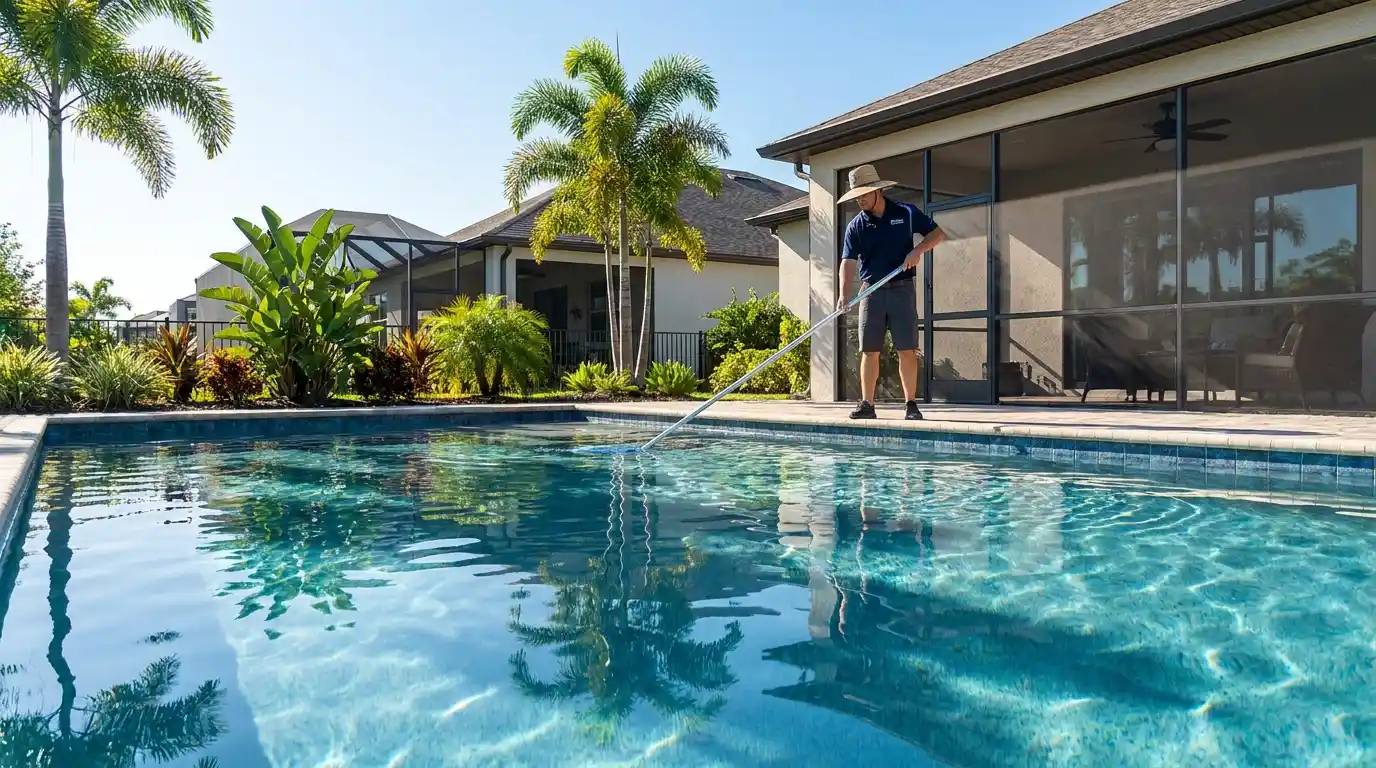
Nothing stops a sunny Central Florida afternoon quite like stepping outside and finding a swamp where your pool used to be. A green pool is one of the most common problems homeowners face in Auburndale and across the region. Fortunately, green pool cleanup is very manageable when you understand what causes it and how to fix it fast.
Florida’s warm temperatures and intense sunshine create perfect conditions for algae growth. Because of this, a pool can turn green surprisingly quickly — sometimes within just a few days of neglect. The good news is that the right treatment plan can restore your water to sparkling clarity.
Whether you’re dealing with a light green tint or a full-blown swamp situation, this guide walks you through everything you need to know. We’ll cover the causes, the step-by-step cleanup process, and tips to keep your pool clean all season long.
Why Does a Pool Turn Green?
Understanding the cause is the first step toward a lasting fix. In most cases, a green pool means one thing: algae. Algae are microscopic organisms that thrive in warm, nutrient-rich water. Central Florida’s climate makes it an ideal environment for rapid algae growth.
However, algae don’t appear out of nowhere. They take hold when your pool’s chemical balance slips out of range. Additionally, poor circulation or a dirty filter can speed up the problem significantly.
Common Causes of Green Pool Water
- Low chlorine levels: Chlorine is your pool’s primary defense against algae. When levels drop too low, algae bloom quickly.
- Imbalanced pH: When your pH is too high or too low, chlorine becomes far less effective.
- Poor water circulation: Stagnant water creates the perfect breeding ground for algae.
- Clogged or dirty filters: A filter that can’t do its job allows contaminants to multiply.
- Heavy rain or storms: Florida’s frequent rain dilutes chemicals and introduces organic debris.
- Extended pool inactivity: Skipping regular maintenance even for a short time can trigger an algae bloom.
Because Auburndale homeowners enjoy their pools almost year-round, staying on top of water chemistry is essential. Even during cooler months, warm Florida days can still encourage algae growth.
How to Perform a Green Pool Cleanup Step by Step
A thorough green pool cleanup takes patience and consistency. Moreover, skipping steps can lead to a recurring problem. Follow this process carefully for the best results.
Step 1: Test Your Water Chemistry
Before adding any chemicals, test your pool water first. You need a clear picture of where your levels stand. Use a reliable test kit or take a water sample to your local pool supply store.
Check these key values:
- Chlorine level
- pH (target: 7.2–7.6)
- Alkalinity (target: 80–120 ppm)
- Cyanuric acid (stabilizer) level
In addition, note how green the water is. A light green tint requires less intervention than deep, murky water. Furthermore, darker green water often signals a heavier algae bloom that will take more time and chemicals to treat.
Step 2: Remove Debris and Brush the Pool
Next, remove all large debris from the pool using a leaf net or skimmer. Don’t run your vacuum yet — the water is too cloudy. However, brushing the pool walls, floor, and steps is critical at this stage.
Brushing loosens algae from surfaces. As a result, your chemicals will work far more effectively. Pay extra attention to corners, steps, and shaded areas where algae tend to cling most stubbornly.
Step 3: Shock the Pool
Shocking is the heart of any green pool cleanup. Pool shock is a high-dose chlorine treatment designed to kill algae and bacteria rapidly. For a green pool, you’ll likely need to shock at a significantly higher dose than normal.
Therefore, always shock at dusk or nighttime. Sunlight breaks down chlorine quickly, so shocking during the day wastes much of the treatment. Additionally, run your pool pump continuously throughout this process to circulate the chemicals evenly.
For deeper green water, you may need to repeat the shock treatment after 24 hours. Meanwhile, keep the pump running and avoid swimming until the water clears and chlorine levels return to a safe range.
Step 4: Add an Algaecide
After shocking, add an algaecide to target any remaining algae. Algaecide works alongside chlorine to eliminate algae more completely. However, always add algaecide after shocking — never at the same time — to avoid reducing the effectiveness of either product.
Follow the manufacturer’s dosage instructions carefully. Additionally, continue running the pump for at least 24 hours after treatment.
Step 5: Run the Filter and Backwash Regularly
Your filter is working overtime during a green pool cleanup. Because of this, it needs extra attention. Run your filtration system continuously and backwash the filter every 24 hours or whenever the pressure gauge reads high.
For severe cases, you may also want to add a pool clarifier or flocculant. These products help clump dead algae particles together so your filter can capture them more easily. Furthermore, if your filter media is old or worn, this is a great time to replace it.
Step 6: Vacuum the Pool
Once the water begins to clear, it’s time to vacuum. Set your multiport valve to “waste” rather than “filter” when vacuuming up dead algae. This prevents the algae from cycling back into the pool through your filter system.
Additionally, go slowly and methodically across the entire pool floor. Finally, test your water chemistry once more after vacuuming to confirm all levels are balanced before you start swimming again.
How Long Does Green Pool Cleanup Take?
The timeline depends on how severe the algae bloom is. For a mild green tint, you may see clear water within 24 to 48 hours. On the other hand, a severely green or black-bottom pool can take several days of repeated treatment.
Therefore, don’t rush the process. Patience and consistency deliver far better results than trying to cut corners. Moreover, jumping back into the pool too early can expose your family to harmful bacteria still present in the water.
If you’re in Auburndale or anywhere in Central Florida and need professional help clearing your pool fast, call Extreme Pools Inc. at 863-289-9619. Our team is available Monday through Friday, 9 AM to 4 PM, and we’re always happy to help local homeowners get back to enjoying their backyards.
Preventing Green Pool Water in Central Florida
Prevention is always easier than cleanup. Furthermore, in a warm climate like Central Florida’s, staying proactive protects your investment and your swim season.
Maintain a Consistent Maintenance Routine
Test your water at least once a week. Adjust chlorine, pH, and alkalinity levels as needed. Additionally, keep your skimmer basket and pump basket clean to maintain strong water flow.
Brush and vacuum your pool regularly, even when the water looks clean. Also, run your pump long enough each day to turn over the full volume of water — typically eight or more hours in summer.
Keep Your Equipment in Good Shape
Your filter, pump, and circulation system are your pool’s first line of defense. Therefore, schedule routine equipment inspections and keep your filter media clean and fresh. A well-maintained system dramatically reduces the risk of algae growth.
In addition, consider upgrading to an energy-efficient variable-speed pump. These pumps run longer at lower speeds, improving circulation without dramatically increasing your energy bill. Many Central Florida homeowners find this upgrade pays for itself over time.
Use a Stabilizer Year-Round
Cyanuric acid, or stabilizer, protects your chlorine from breaking down in Florida’s intense sunlight. Without it, the sun can destroy your chlorine within hours. However, be careful not to over-stabilize, as too much cyanuric acid reduces chlorine’s effectiveness.
Finally, after heavy rain, always test and re-balance your water. Florida storms are notorious for throwing pool chemistry off in a hurry. A quick test after each major rain event keeps your pool from turning green between regular maintenance days.
When to Call a Pool Professional
Sometimes green pool cleanup goes beyond a simple DIY fix. For example, if you’ve shocked the pool multiple times with no improvement, there may be an underlying issue — such as a malfunctioning pump, a failing filter, or extremely high phosphate levels feeding the algae.
Additionally, black algae — a much harder-to-treat strain — requires professional-grade treatment and thorough brushing with specialized tools. Moreover, mustard algae can be deceptive, often returning after what seems like a successful treatment.
In these cases, partnering with a trusted local professional saves time, money, and frustration. Extreme Pools Inc. has proudly served homeowners throughout Central Florida with experienced, friendly service and a commitment to quality that shows in every project we touch.
Ready to get expert eyes on your pool? Contact Extreme Pools today and let our team help you get your backyard back to its best.
Frequently Asked Questions About Green Pool Cleanup
How long does it take to clean a green pool?
A mildly green pool can clear up within 24 to 48 hours with proper treatment. However, a severely green or neglected pool may take several days of repeated shocking, brushing, and filtration. Consistency is key throughout the process.
Is it safe to swim in a green pool?
No. A green pool is not safe to swim in. Algae can harbor harmful bacteria, including E. coli. Additionally, the chemical imbalances present in a green pool can irritate skin and eyes. Always wait until the water is clear, balanced, and holding a safe chlorine level before swimming.
How much shock do I need to treat a green pool?
The amount of shock depends on the severity of the algae bloom and your pool’s volume. For a green pool, you’ll typically use far more shock than a standard maintenance dose. Always follow product guidelines or consult a pool professional to avoid over- or under-treating.
Why does my pool keep turning green even after I treat it?
Recurring green water often points to an underlying issue. Common culprits include a malfunctioning filter, low stabilizer levels, high phosphates, or a circulation problem. Furthermore, if your chemical balance swings frequently, a professional water analysis can help identify the root cause.
Can I prevent algae without using chemicals?
While some supplemental tools — like phosphate removers, mineral sanitizers, and UV systems — can reduce chemical dependency, chlorine remains essential for algae prevention. However, pairing these tools with consistent maintenance greatly reduces the frequency of algae problems. Talk to a pool professional to find the right combination for your pool.
Get Your Pool Back to Beautiful with Extreme Pools Inc.
A green pool doesn’t have to ruin your summer — or your backyard. With the right approach and a consistent routine, you can enjoy crystal-clear water all season long. Central Florida’s warm, sunny climate is made for outdoor living, and your pool should be an invitation to relax, not a source of stress.
At Extreme Pools Inc., we’re passionate about helping Auburndale and Central Florida homeowners get the most out of their backyard investment. From new pool construction to renovation, remodeling, and expert guidance on pool care, we bring 5-star craftsmanship and friendly local service to every project.
Transform your backyard into the oasis you’ve always dreamed of with Extreme Pools. Call us at 863-289-9619 today — we’re available Monday through Friday, 9 AM to 4 PM — or reach out online to request a free quote. We’d love to help you create a pool made for lifetime memories.
Extreme Pools Inc. | Serving Central Florida | Phone: 863-289-9619 | Hours: Mon–Fri, 9 AM – 4 PM